Sunday, May 4, 2014

APUSH Review Blog


Discuss the changing ideals of American womanhood between the American Revolution (1770’s) and the outbreak of the Civil War. What factors fostered the emergence of “republican motherhood” and the “cult of domesticity”? Assess the extent to which these ideals influenced the lives of women during this period. In your answer be sure to consider issues of race and class. Use the documents and your knowledge of the time period in constructing your response.


Antebellum Renaissance
1790-1860
Analyzing the question
  • Republican Motherhood- responsibility to cultivate civic virtue of republicanism in their children

  • Focused on the changing women from the American Revolution to the Civil War.
  • Focus on race and class
  • Cult of Domesticity- homemakers and mothers

    Document A-Letter written by a Philadelphia woman, 1776
    • Boycotted English goods,manufactured their own goods, freedom
    • Daughters of Liberty- supported revolution
    • Abigail Adams- “remember the ladies”
    • Molly Pitcher (Mary McCauley)- carried water to soldiers
    • Home manufacturing
    • Document B-Benjamin Rush, Thoughts Upon Female Education, 1787

      • women’s should be educated to educate their children
      • Republican motherhood
      • Oberlin College
      • Catharine Beecher- teaching profession
      • Hartford Female Seminary- train mothers to be teachers and mothers
        Document C: Occupations of Women Wage Earners in Massachusetts, 1837
        • hats,textiles, boots, and shoes
        • paid workforce, limited space
        • Lowell girls
        • Lowell factory system
          Document D: Letter written by a factory worker, 1839
          • positive feeling about factory work
          • women recruited other women
          • some thought work as bad
          • Document E: Margaret Fuller, Woman in the Nineteenth Century, 1845
            • equal opportunities
            • separate spheres- middle class ideal
            • Lucretia Mott- women’s right, abolitionist,
            • Elizabeth Cady Stanton- women’s right movement
            • Seneca Falls- Declaration of Sentiments
            • Document F: Sarah Bagley, “The Ten Hour System and Its Advocates,” Voice of
              Industry, January 16, 1846
              • long hours of work
              • society american womanhood did not apply to the working class
              • ideal v reality
              • Lowell girls
              • immigrant women
              • ocument G: “Woman, and the ‘Woman’s Movement,’” Putnam’s monthly magazine of American literature, science and art, March 1853

                • inferior to men, guardian of man’s humanity
                • moral guardians
                • subordination
                • women movement
                • Declaration of Sentiments
                • Seneca Falls Convention
                • Document H: Harriet Jacobs, Incidents in the Life of a Slave Girl, published in 1861
                  • slaves as property, law did not protect slaves
                  • ideal not extended to slaves
                  • infidelity of their husbands
                  • American Anti Slavery Society
                  • Sojourner Truth- “ain’t I women”
                  • Grimke Sisters- abolitionist and suffragists,
                  • Uncle Tom’s Cabin- novel gained opposition to slavery, Harriet Beecher Stowe
                  • Document I: Letters written by a frontier woman in Iowa to relatives, 1861
                    • women worked in the fields, acceptable work
                    • aspired for cult of ...
                    • Document J: H. L. Stephens, The Parting, 1863
                      • sale of slave family
                      • slave families did not have stability
                      • Underground Railroad
                      • Sojourner Truth- “ain’t I woman”
                      • Harriet Tubman- conducted the underground railroad
                      Thesis- The cult of domesticity and republican motherhood was embraced as part of American womanhood with middle and upper class using it as a handicap to reach social and economic equity; however, such ideal could not be embraced by the working class and African Americans due to economic and social repression.
                      Class

                      • lower class and black women
                      • young women- work in factories
                      • Lowell girls- semi-acceptable working conditions
                      • obligated to attend church
                      • no economic advancement- for men
                      • Dorothea Dix- against inhumane treatment of insane prisoners
                      • Clara Barton- founded the Red Cross
                      • nursing

                        Race
                        • white- cult of domesticity
                        • black- freed and enslaved
                        • not able to practice republican motherhood
                        • torn apart from families- unable to instruct values
                        • the law didn’t do anything
                        • slaves forbidden to marry
                        • taught to admire both but unable to
                        Politics

                        • advocates of women’s political rights- shunned
                        • suffragist- not seen as ladies
                        • Seneca Falls Convention
                        • Susan B. Anthony- woman and men are equal
                        • Margaret Fuller- Transcendental journal
                        • cult of domesticity and republican motherhood- bad for advocates of women’s right

                          Social Reforms
                          • educated and middle class women- social reform
                          • advocates of temperance and prohibition
                          • organized anti-alcohol groups
                          • abolitionist
                          • Grimke sisters
                          • Uncle Tom’s Cabin


        Religion
        • Great Awakening
        • moral supremacy- country’s values
        • make intellectual and physical superiority- out of politics and economics
        • cult of domesticity- moral preservation and instruction
        • occupation of teaching
        • republican motherhood- unmarried women teaching
        • enforced
        Conclusion
        • American womanhood was suppose to be followed by every woman living in America; however, it was not due to economic and social repressions.
        • It was not welcomed by advocated for women’s right because it suppressed their ability.
        • 19th amendment

Truman Doctrine, Hanoi Hilton

If you were assigned an Event or situation you need to summarize the event add primary source analysis, and include a video of the event or situation in 3 paragraphs.
Truman Doctrine
      The Truman Doctrine came to be after Britain was unable to provide financial support to pro-democratic countries, usually surrounded by pro-Soviet countries. Truman instituted the Truman doctrine in order to help financially countries retain the pro-democratic stances. President Eisenhower invoked the Eisenhower Doctrine ten years after his predecessors Truman Doctrine. In 1947, President Truman asked congress for four hundred million dollars in order to prevent countries such as Turkey and Greece fall into communism. 
      Truman said it is the duty of the Unites States to help countries overthrow and stop communism. Therefore, he provided aid in the ways he sought fit since Britain could no longer provide support. The doctrine supported countries through economic means not so much through military action. Controversy was seen when that support for all countries was not economically possible such as the case with the Hungarian revolt under the Eisenhower doctrine.
Truman Doctrine
      Britain informed the United States it could no longer provide financial aid to Turkey and Greece. This was due since war world 1 had a lot of economic repercussions and Britain was widely affected. It was then that the idea of the United States responsibility to help countries to not fall into communism came to be. With the Truman Doctrine the Domino theory was created. Truman addressed the American people through the radio and gave extreme importance to a measure against communism.

Hanoi Hilton
     The capital of communist Vietnam was the Hanoi and the area surrounding it was called the Hanoi Hilton by American prisoners of war. In 1948, the Geneva Convention to discuss the treatment of prisoners of war and how countries were to conduct warfare. North Vietnamese did not follow the treatment of prisoners of war established by the Geneva Convention due to the fact the U.S. did not officially declare war. As a result, American prisoners of war were badly treated and considered pirates and air pirates. The Hanoi Hilton is the base of interrogation for the Vietnamese were cruel treatment was practiced. The Vietnamese practiced sensory deprivation and with that process were able to get information from the soldiers.
      However, American soldiers were trained and educated in military academies; their command was not to leak information unless the pain became unbearable. Being educated soldiers created a communication system in the prison with the basis of the Morse code. The soldiers then gave inaccurate information to their captors and were not caught. The Vietnamese believed the treatment worked and trusted the information. Some American soldiers lived in the Hanoi Hilton to up to 8 years and managed to survive using the communication system.
Documentary -video
Primary Source
     The primary source is derived from the Geneva Convention which is supposed to ensure the treatment of prisoners of war is not brutal.It states that the enemy power is held responsible for the treatment of the prisoner and can be accused if an individual violates the Geneva Convention. It is the responsibility of the enemy power to return the custody of the prisoners if the convention is violated. The convention states no brutal treatment can be given to prisoners such as mutilation. The enemy power is also in charge of the health and medical fees of the prisoners. This was important because Vietnam violated the Geneva Convention;however, it was okay because the U.S. did not officially declare war against Vietnam.

Thursday, April 24, 2014

President Johnson (Political Cartoons)


The anti-Vietnam War movement was important for the youth of United States because students gathered and projected their collective voice. College students used posters in order to protest along with marches and demonstrations. The Student Mobilization Committee was a national organization which encouraged the formation of campus committees to end the war, such as thee poster Bring the Troops Home Now. The phrase was a common slogan for antiwar organizations and rallies; the phrase was also the name of a newspaper that was dedicated to reduce the amount of troops sent to Vietnam. The designer of the poster is Nancy Coner. Johnson saw the Vietnam War as a struggle in order to end the expansion of communism as part of the containment policy. The public slowly grew in opposition to the war that dragged on especially after televised events of the Tet Offensive. Americans were divided into "hawks" and "doves" in which the doves led anti-war demonstrations. 

The political cartoon is trying to convey the truth of Vietnam. The significance of the cartoon was before the media became involved the citizens were lied about the motives to fight in Vietnam.

Once the media became involved it exposed the cruelties and true horrors of what was happening there.  This also was the beginning of people’s distrust in the government.  The bucket in the left side of the picture explains how the government dealt with the Vietnamese.  They would go into their territory and kill off as much of their culture and families as they could. The police officer is painting over what they wanted to cover up during the war.  In the end, there was no victory in the war. Many were killed and that was the truth that many Americans did not see.


In this particular cartoon from The Washington Post, Shakespeare’s Julius Caesar is reinterpreted in such a way that the administration is plagued with problems. Furthermore, this critique of Lyndon Johnson’s handling of the Vietnam War was satirized as being Caesar-like.

Gabriel Garcia Marquez

President Johnson (Seminar)


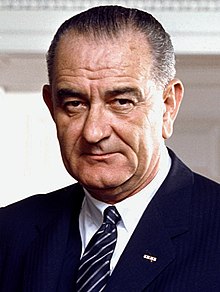
President Johnson presidency was from 1963-1969 and he took charge after JFK was assassinated. President Johnson led the United States effectively through the Cold War because he nurtured the people after JFK's assassination.  Johnson was very dedicated to his job as presidents till the point he memorized names and faces. But the Great Society, a social plan, for Americans represented how much he cared to bring up his people and out of poverty. He titled a program War on Poverty designed to help the many American go to college and find job. The Civil Rights Movement was also important and he believed equal rights was necessary for every American. The Civil Rights Bill and the Voting Rights of 1965 ensured and reinforced the rights of African American and any minority in the future. 
Working with his predecessors work Johnson already had a foreign policy that he was obliged to work with. An example is the Gulf of Tonkin Resolution where it asked Congress for money to support a war against communism of North Vietnam. Johnson did not have other choices than to proceed with the proposition because of the Domino Theory and Truman and Eisenhower doctrine dictated. Although America lost the Vietnam War, Johnson led the country by always being updated and trying to end the war. Left with horrifying images from the Tet offensive Americans and Johnson truly saw what war was. 
Truman did not to a good job leading America through the Cold War. He set up expectations against communism that would cost a lot of money and that money could be used to help American in other aspects. President Eisenhower used a lot of money to create weapons and with realization the Eisenhower doctrine was a fail because excessive fund must be placed to fight against communism.

Thursday, March 20, 2014

Dorothea Lange

On the Road 1939
Dust Bowl migrants
dirty because of sever dust storm
farms became unlivable so needed to find somewhere else
Causes
Homestead act of 1862 and transcontinental railroad
Kinkaid Act 1904
Enlarged Homestead Act 1909
Severe drought and dust storms

human displacement
dust pneumonia or malnutrition
land barren and home seized in foreclosure

FDR 100 days in office
Soil Conservation and Domestic Allotment Plot 1936
Federal Surplus Relief Association
Drought Relief Service
Civilian Conservation Corps

move


Problem, Possible Cause, Government Responsibility, Possible Solution

Tuesday, March 4, 2014

Mass Death and Destruction (during WW1)


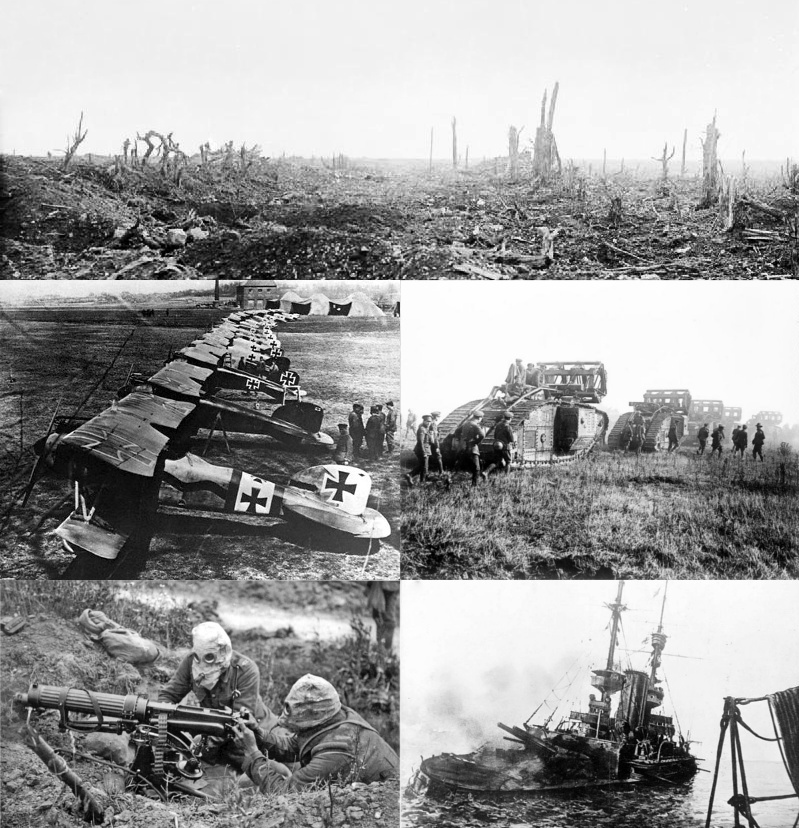
War World 1, belligerents are the Allied (Entente) Powers and the Central Powers, which was centered in Europe lasting about four years from July 28, 1914 till November 11, 1918. In this war more than 9 million combatants, people who are directly involved in the war, died. The war brought in economic world powers where the Triple Entente was based on United Kingdom, France, and Russian Empire and the Central Powers based on Germany and Austria-Hungary. War World I was the introduction to warfare and the use of modern technology which resulted in mass destruction and death, and by November 1918 more than 9 million soldiers were killed.
Chemical weapons in warfare, such as poison gas was introduced by Imperial Germany in 1915 the Battle of Bolimov. Through chemical weapons used by both sides it was estimated of a 1.3 million casualties. Chemical casualties- for British was over 180,000 during war, one-third of U.S. casualties by gas, and 500,000 chemical weapon casualties reported by Russian Army. The 1899 Hague Declaration Concerning Asphyxiating Gases and the 1907 Hague Convention on Land Warfare were treaties prohibiting the use of chemical warfare which both sides violated. Soldiers were not the only endangered from the chemical warfare, civilians were also endangered due to blowing winds and ineffective gas masks. The idea of genocide and ethnic cleansing was prevalent in War World I and not only in Germany. In Turkey, the Ottoman Empire went against the Armenian population through Tehcir Law and mass execution. In Russia, Jews were targeted and estimated 60,000-200,000 were killed. The Rape of Belgium is a term used during German occupation and invasion to describe the treatment of civilians
POW were guaranteed a higher survival rate then those in the front line because all nations pledged to follow fair treatment of prisoners of war in the Hague Convention. Conditions in camps were satisfactory due to neutral nation's inspection and the International Red Cross. Russia and Germany seemed to be exceptions because starvation was a problem to both prisoners and civilians. The Ottoman Empire treated the POWs harsh by making them march and building a rail.